Swedish parliament member Anders Ådahl on Energy Systems, Research, and Politics
Few people have worked on energy issues from as many different perspectives as Anders Ådahl. Having held senior positions in the energy industry, academia and politics, he brings an unusually broad view of the challenges shaping tomorrow's energy system. We had the opportunity to ask him a few questions about energy systems, research and policy.
Anders Ådahl earned his PhD in Energy and Environment and spent many years as Head of Research at Göteborg Energi. He later returned to academia, where he was, among other roles, Director of Chalmers' Energy Area of Advance. In 2022, he was elected to the Swedish Parliament and now serves as the Centre Party's spokesperson for higher education and research, as well as the recently appointed Chair of the Committee on Industry and Trade. |
|
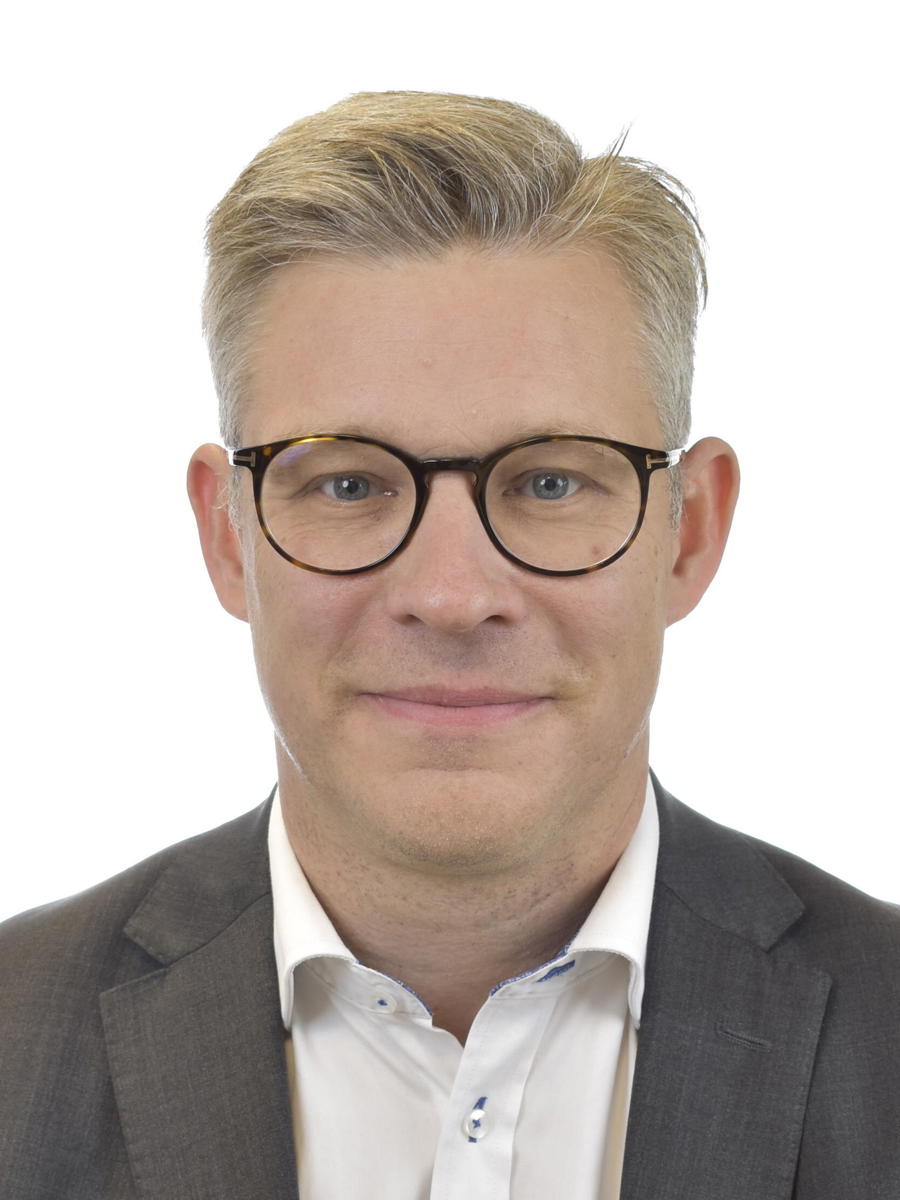
Anders, what made you enter politics?
"I had long felt that I wanted to become politically engaged at some point. I'm not the kind of person who likes to stand on the sidelines and complain. I want to be involved and make a difference. Around 2017, I felt ready to turn my interest in society and my knowledge of energy issues into national politics. The following year, I became a local politician and Chair of the Environmental Committee in Mölndal. Being involved in local government provided valuable experience and helped me understand that political decisions always affect individual people."
How would you describe the current debate on energy issues?
"For several years, the debate has often been quite superficial and reduced to being either for or against nuclear power. At the same time, there has been a widespread misconception that Sweden generally suffers from electricity shortages and very high electricity prices. Over the course of a year, Sweden actually has relatively low electricity prices compared to the rest of Europe. However, under certain conditions, prices can become very high, particularly in southern Sweden. Those price spikes receive considerable attention and tend to shape public perception."
How would you like the energy debate to be conducted?
"The debate should start from the goals of the energy system rather than focusing on individual technologies. At the European level, people often talk about three objectives that must be met: security of supply, climate and environmental sustainability, and affordable prices. The role of policymakers is to create a system that delivers all three. When the discussion becomes locked onto a specific technology, it is easy to lose sight of the system perspective and forget what problem we are actually trying to solve."
How can researchers become better at contributing to energy policy decisions?
"Sweden is very good at technology development, but it can be difficult for policymakers, who operate in a completely different sphere, to see all the opportunities that exist. If research could be communicated and packaged differently, I believe decision-making would improve. It is one thing to be highly knowledgeable about energy systems and technologies, and quite another to understand political mechanisms. Both perspectives are needed to drive progress. We need a shorter distance between these two worlds.""
What do you consider the most important energy issue today?
We are currently electrifying both the transport sector and industry, and the major challenge is ensuring that grids and generation capacity are available in the right place at the right time. I would therefore say that timing is crucial: matching growing energy demand as efficiently as possible with appropriate generation and grid infrastructure. We also need to discuss future data centres and consider which priorities for grid connections and new establishments generate the greatest value for society. Ultimately, it is not a single issue but, as I mentioned earlier, a matter of making all parts of the system work together."
How do you view Sweden's future energy system?
"Sweden's energy system must be seen as part of Europe, with which we are physically, financially and legally interconnected. The world is becoming increasingly regionalised, and we need a strong Europe because that benefits Sweden globally as well. Looking specifically at Sweden, we need to become better at viewing electricity, heat, biofuels and other energy sources as parts of the same system. A comprehensive review is needed to optimise the whole and preserve Sweden's strong position as an energy nation. At present, some policy signals still tend to favour fossil alternatives while disadvantaging electrification, and that needs to change."
What are your views on balancing and flexibility?
"Balancing and flexibility are key to the future electricity system. Greater shares of weather-dependent generation require energy storage and other technical measures, both at the system level and on the customer side. Energy always needs to be stored somewhere. It can be stored in the fuel before generation, such as nuclear fuel or natural gas, or after generation through technologies such as batteries. Demand-side flexibility is also important, but it is not a complete solution."
Which investments will be most important?
"If priorities have to be made, I believe investments in electricity grids will be even more important than investments in generation capacity, although both are needed. Sweden must strengthen transmission capacity between the north and south, expand local grids, and create greater redundancy, something that has become increasingly important from a security perspective. Demand will also become more variable as, for example, large numbers of electric vehicles are charged simultaneously. Both municipal grid operators and transmission system operators therefore have major tasks ahead of them. From a resilience perspective, there are advantages to having many distributed generation units, but energy policy should fundamentally remain technology-neutral."
What are your views on energy research today?
"I believe Sweden needs a clearer distinction between curiosity-driven basic research and research that is closely linked to applications and industry. Researchers working on issues such as grid balancing should engage more closely with business developers and company executives, rather than only interacting with a single enthusiastic technology specialist within a company. This requires changes in funding structures and collaboration models, but researchers and research centres can already seek more direct integration with industry and policymakers. We also need to accelerate the journey from idea to business. The traditional linear model, where research gradually progresses through application, demonstration and market deployment, often takes too long."
How do you view the Swedish Electricity Storage and Balancing Centre?
"Research centres play an important role by bringing together different disciplines and connecting academia with industry. However, the question is not only what centres can contribute in five or ten years, but also what they can contribute today. SESBC needs to clearly demonstrate what is technically possible, and which problems balancing and energy storage can and cannot solve. The centre should also play a more active role in the public debate by writing opinion pieces and participating in forums that extend beyond purely technical audiences."